Emergency Storm Damage: What to Do First
June 9, 2026 · Atwater Tree Services
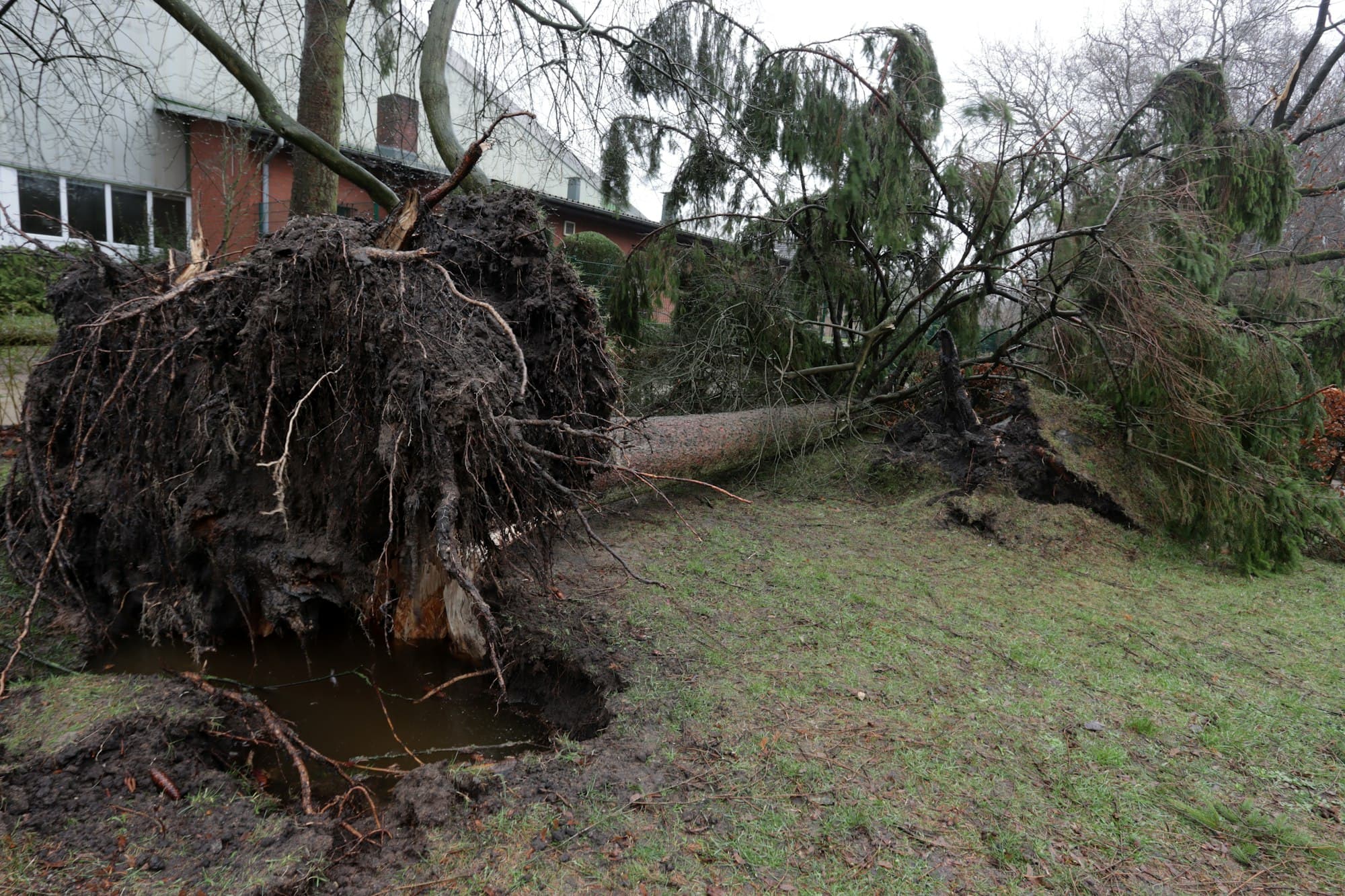
Every winter it happens somewhere in Merced County: a tule-fog storm rolls through, the ground is saturated, the wind picks up, and a tree that stood for fifty years is suddenly on a roof, a fence, or a driveway. If that is you right now, take a breath. The next hour matters more than the next day, and doing things in the right order keeps a bad night from becoming a dangerous one.
Step 1: Get People Away From the Tree
Before anything else, get everyone — family, pets, curious neighbors — away from the downed tree and anything it is touching. A tree that has partially failed is not done moving. Limbs under tension can release violently, and a trunk resting on a roof or fence can shift without warning. Stay out from under anything hanging, and do not let anyone climb on or over the debris to "check things out."
Step 2: Assume Any Line Is Live
If the tree is touching a power line, or a line is down anywhere near it, treat the entire area as energized. Stay far back, keep others back, and call the utility immediately — around here that is generally PG&E or, in the city itself, Merced Irrigation District's electric service depending on where you are. Do not touch the tree, the line, a fence the line is touching, or standing water near any of it. Downed lines kill people every storm season, and they do not always spark or hum.
No tree crew — including ours — will touch a tree that is in contact with an energized line until the utility clears it. That is not us being difficult; it is the only way this work gets done safely.
Step 3: Check the House, Then Get Out If Needed
If the tree hit your house, do a quick check for the serious stuff: smell of gas, sparking, water pouring in, sagging ceilings. If anything feels structurally wrong, get out and stay out. A punctured roof is a repair; a compromised structure with your family inside is an emergency. Call 911 for anything involving injury, fire, or gas.
Step 4: Document Everything Before Cleanup
Once everyone is safe, grab your phone and take more photos than feels necessary. Wide shots showing the whole scene, close-ups of damage to the roof, fence, vehicles, and the tree itself — including where it broke or uprooted. Your insurance adjuster will want all of it, and photos taken before any cleanup are worth far more than photos taken after. Note the date and time of the storm while you are at it.
Then call your homeowner's insurance and open a claim. Most policies cover tree damage to structures, and many cover at least part of the removal when a structure is involved. Coverage varies, so ask directly what is included.
Step 5: Stabilize, Don't Solve
If water is coming in, a tarp over the breach is reasonable — if you can do it without going near the tree or getting on a damaged roof. Otherwise, resist the urge to start cutting. Storm-damaged trees are the most dangerous work in this trade. Trunks and limbs are loaded like springs, root plates can rock back, and chainsaw injuries spike after every storm from homeowners trying to handle wood under tension. A tree on a structure needs to be rigged and removed in pieces, in the right order, by people who do it for a living. This is exactly what our emergency storm service exists for.
Step 6: Call a Crew, and Watch Out for Storm Chasers
Call a local, insured tree service as soon as the scene is safe and documented. Be specific: what fell, what it is on, whether lines are involved, and whether the utility has been called. That lets a crew show up with the right equipment the first time.
One warning from experience: after every big Central Valley storm, out-of-town operators cruise neighborhoods knocking on doors, quoting cash prices, and disappearing before the stump is cold. Ask for proof of insurance and a local reference. A legitimate local outfit will still be here in the spring when your insurance company has follow-up questions.
After the Emergency: Look at What's Left
Once the immediate mess is handled, walk your property and look hard at the survivors. A tree that lost a major limb, is newly leaning, or has a cracked union is a candidate for the next storm. Summer heat stress weakens Valley trees more than people realize, and winter wind finds every weak point. A post-storm assessment — and sometimes a preventive removal or structural prune — is a lot cheaper than doing this all again in February.
We Answer the Phone in Storm Season
Atwater Tree Services runs emergency response across Atwater, Merced, Winton, Livingston, Delhi, and the surrounding county. If a tree is on your house, fence, or driveway, call (209) 375-4303 — we will help you triage over the phone, and estimates for the work are always free.
Questions about your property? Call (209) 375-4303 for a free estimate.